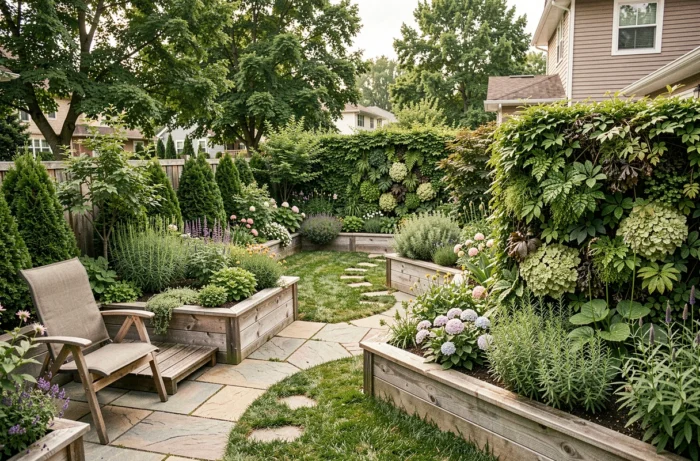
The layout of a garden is based on three technical axes: managing available water, structuring volumes, and choosing plants suited to the soil and local climate. Starting with a decorative desire without considering these constraints often leads to costly reworks by the second year. Here are ten concrete ideas to transform your outdoor space while taking these realities into account.
1. Permanent mulching of flower beds to reduce watering
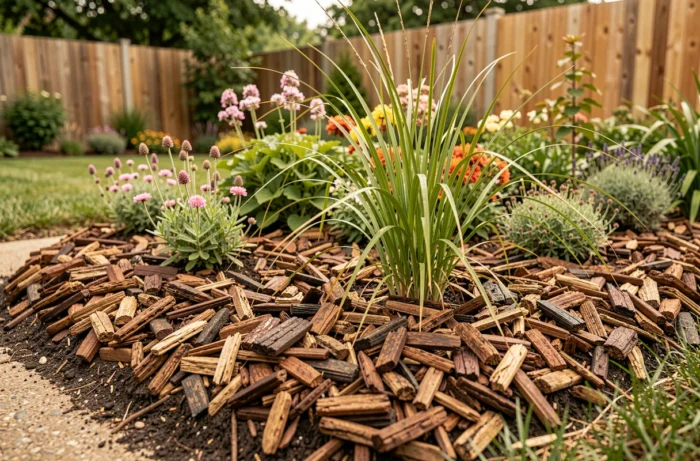
Before planting anything, the question of water arises. Watering restrictions vary according to municipal decrees and may prohibit watering ornamental gardens during drought periods. Organic mulching (wood chips, dead leaves, hemp straw) significantly reduces soil evaporation and limits water needs.
Apply a thick enough layer at the base of shrubs, perennials, and in flower beds. Mulching also slows the growth of weeds, which decreases maintenance time. If your land is clayey, prefer a mineral mulch (slate, pumice) that does not retain moisture against the collars.
The ideas from Dédé in his garden show how mulching visually restructures a space while playing a key technical role.
2. Rainwater collector connected to gutters
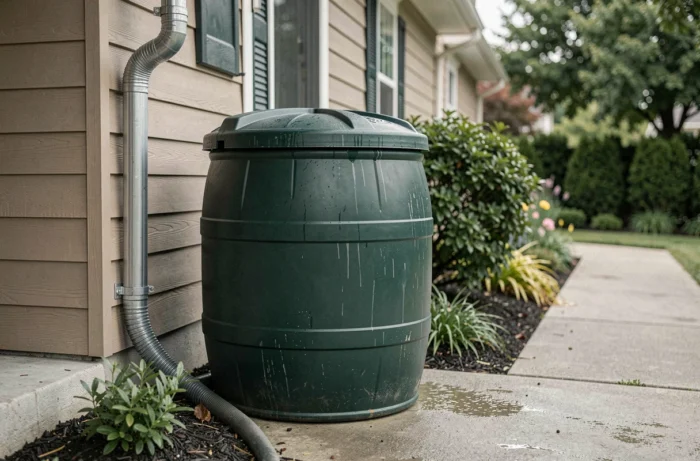
The decree and order of July 12, 2024, applicable since September 1, 2024, updated the rules for rainwater harvesting. For outdoor use (watering the garden, cleaning the terrace), the framework remains simple and does not require a separate network. However, any indoor use requires a separate network from drinking water and, in some cases, a declaration at the town hall when connecting to the collective sanitation network.
Installing a collector downstream of a gutter is a quickly amortized investment. Plan for a storage volume suitable for the gap between rainy seasons and the periods when the garden consumes the most water, generally from May to August.
3. Elevated wooden terrace to create a distinct living space
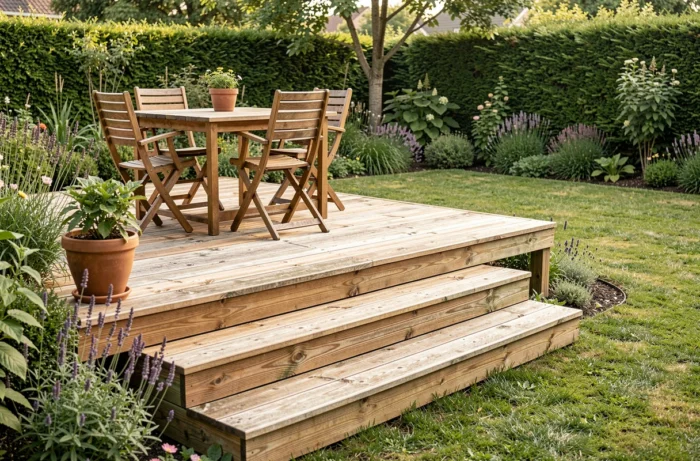
Rather than pouring a slab at the same level as the lawn, raising the terrace by a few centimeters creates a clear visual break. This change in level defines the dining or relaxation area without a fence or screen. Wood remains the most common material for this type of structure, but check its usage class according to your land’s exposure to the elements.
A well-ventilated joist frame underneath extends the lifespan of the decking. Consider orienting the terrace to enjoy the sun in the evening, especially if it hosts summer meals.
4. Outdoor lighting directed towards the ground and in warm light
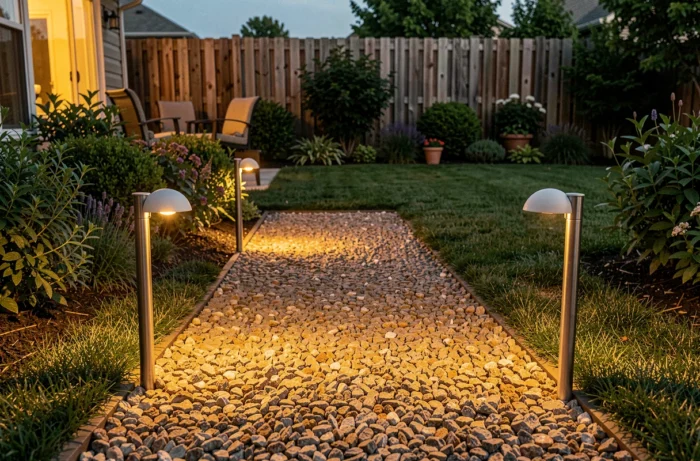
Garden lighting serves more than just ambiance. The national order of December 27, 2018, regulates light pollution, and even if its obligations do not all apply to private gardens, its principles remain relevant. Directing fixtures towards the ground and choosing a warm color temperature limits disturbance to nocturnal wildlife (insects, bats, birds).
Low bollards along paths or recessed spots in the terrace steps are enough to secure movement without flooding the garden with light. Avoid powerful floodlights left on all night.
5. Curved path with stepping stones to visually enlarge the area
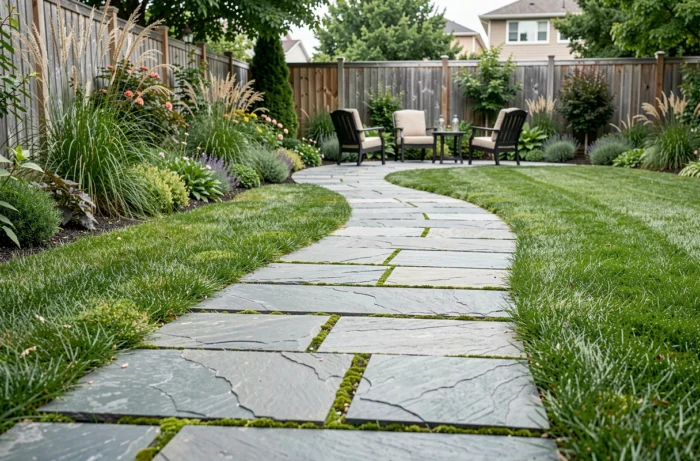
A straight line between the door and the back of the garden shortens the perspective. Curved paths force the eye to follow a route and give a greater sense of depth. Stepping stones (natural stone or concrete slabs placed in the lawn) allow you to create this path without heavy work.
Space each slab a natural step apart (about the length of a stride) and slightly lower the lawn so that the mower can pass without snagging. The result structures circulation while preserving the grassed area.
6. Mixed edible hedge instead of thuja
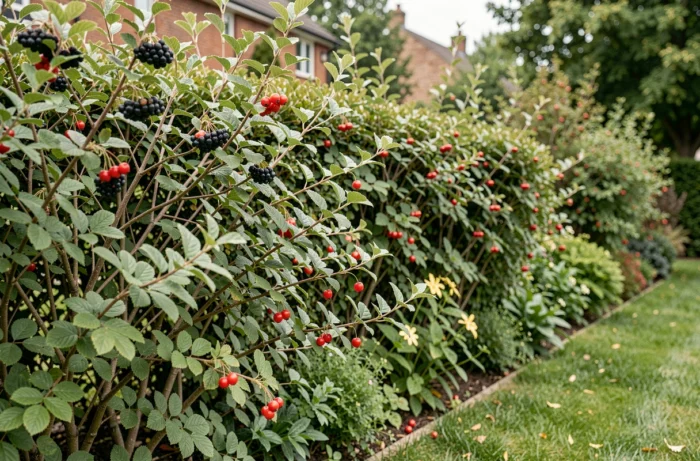
Replacing a single-species thuja hedge with a mixed hedge combining fruit-bearing shrubs (currants, blackcurrants, hazelnuts) and evergreens (oleaster, photinia) brings several simultaneous benefits. Plant diversity attracts pollinators, provides a harvest each year, and offers a varied visual screen throughout the seasons.
Adapt the choice of species to the soil type and exposure. A mixed hedge requires a bit more pruning than a thuja wall, but it is more resistant to diseases and does not require massive replacement if one plant dies.
7. Raised wooden planters for an accessible vegetable garden
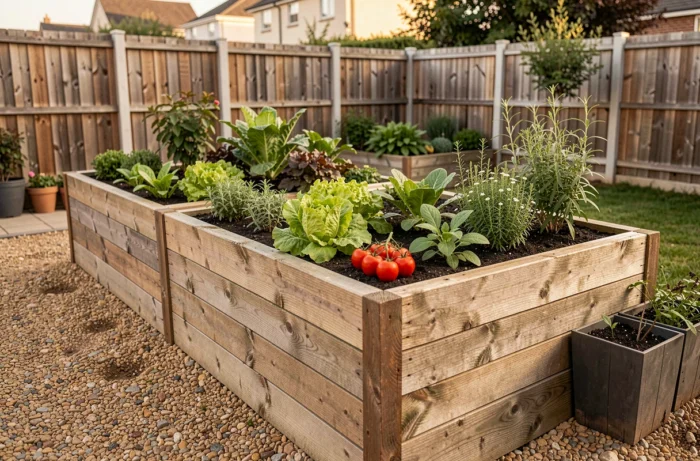
Raised beds solve several common problems: overly compact soil, poor drainage, back pain while gardening. Built from untreated wood planks (larch, douglas fir), they are filled with a mixture of topsoil and compost that provides plants with quality substrate from the first season.
Place them in the sunniest area of the garden, oriented north-south to increase row exposure. Three modest-sized beds produce enough salads, tomatoes, and herbs for regular consumption without turning the garden into a market garden.
8. Green wall on an unsightly facade
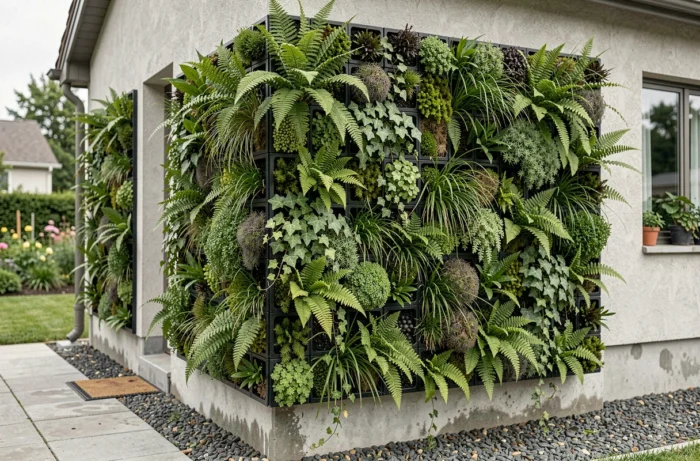
A damaged wall, a technical room visible from the terrace, or an awkward view can be effectively concealed behind climbing plants. Star jasmine, ivy, or climbing hydrangea can cling on their own or on a trellis fixed a few centimeters from the wall to allow ventilation.
The green wall masks a flaw while adding vertical greenery, which is valuable in small gardens where soil is limited. Ensure the support is healthy before fixing anything, and plan for annual pruning to prevent the foliage from overwhelming openings.
9. Drainage gravel area around existing trees
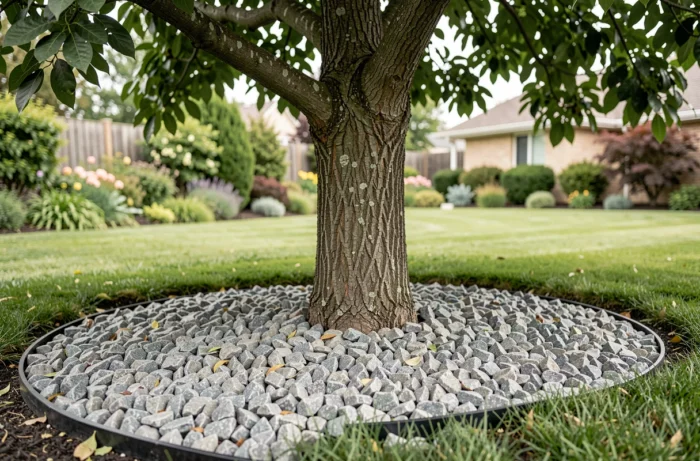
Rather than leaving bare soil or a sparse lawn at the base of large trees, a crown of drainage gravel on geotextile fabric creates a clean and aesthetic space. The gravel prevents soil compaction from trampling and allows rainwater to seep to the roots.
Choose light gravel (limestone, crushed marble) to brighten shaded areas or dark gravel (slate, basalt) for contrast with the foliage. This technique also applies to passage areas where the lawn does not hold, such as along a north wall.
10. Integrated wooden bench in a slope or low wall
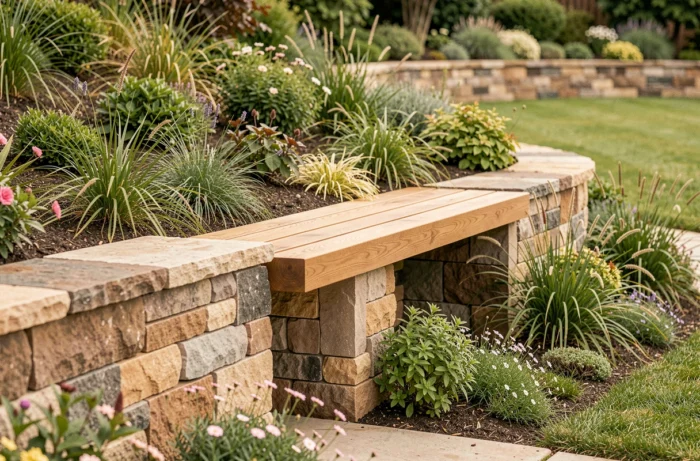
A fixed bench, integrated into a retaining wall or slope, transforms a structural element into a comfortable seat. Unlike movable garden furniture, an integrated bench cannot be stored away and creates a permanent anchor point in the landscape.
Use treated solid wood planks for outdoor use, placed on stone or concrete supports. This type of seating works particularly well at the edge of a terrace or facing a flower bed, where one naturally stops to enjoy the garden.
Each of these ideas addresses a specific constraint: available water, realistic maintenance, terrain structure, or current regulations. The most sustainable layout is the one that starts from the soil and climate, not from a photo on social media.