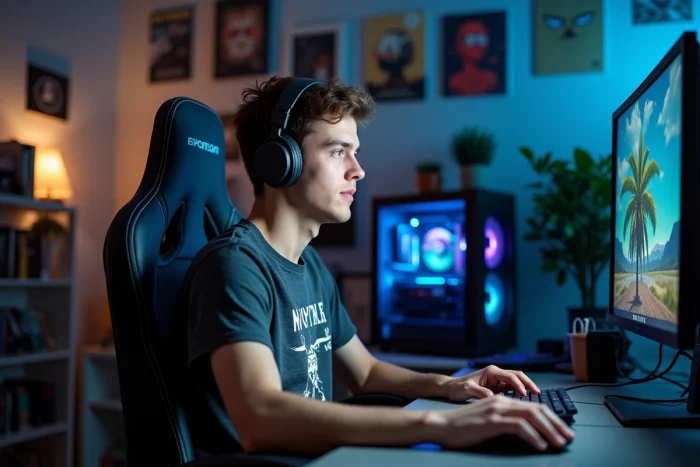
A high-end graphics card can consume more than a small refrigerator. Some components continue to draw power even after the PC is turned off. The consumption figures displayed by manufacturers rarely match the reality of an intense gaming session.
In this environment, the energy bill of a passionate gamer depends on multiple technical and behavioral factors. Consumption discrepancies can be surprising, even between two seemingly similar machines.
Understanding the power consumption of a gaming PC: what really matters
It is impossible to summarize the power consumption of a gaming PC with a simple figure on the box. In this area, everything hinges on the power of the components, usage choices, and the nature of the installed games. The centerpiece? The graphics card, which, on high-end models, can easily exceed 300 W when fully utilized. The processor (CPU) is not far behind, sometimes flirting with the 100 W mark or more on the most powerful generations.
On the power supply side, a unit of 650 to 850 W is often chosen to ensure stability during load spikes. However, the power supply does not always draw this power: it simply needs to handle variations and provide the necessary margin. Add to this the peripherals: a 27″ 144 Hz monitor easily consumes 40 to 60 W, well above office monitors. RGB keyboards, headsets, and connected accessories also add to the total.
To get an idea of the annual consumption, you need to multiply the average power of the machine by the time spent gaming, then convert it all to kWh. With hours of gaming accumulating, the electricity bill rises quickly, especially for marathon sessions.
If you want to compare these estimates with real cases, the gamer consumption estimation on Strat et Geek offers comparisons that take your equipment into account. The variety of types of computers also plays a role: a well-equipped desktop PC is nothing like a gaming laptop, which generally stays below 150 W but heats up more and requires more ventilation over time.
And don’t be fooled: gaming is not the only time the computer consumes power. Sleep mode, multiple screens, keeping background software active, or simply managing peripherals all contribute to the bill. For the meticulous gamer, every detail counts in the overall energy consumption.
How to measure the power consumption of your gaming computer?
To truly know the power consumption of your gaming PC, it’s best to rely on reliable tools and a practical method. Nothing beats a wattmeter: you plug it between the wall outlet and the PC’s power cable, and it displays the power consumed (in watts) in real-time. Note the figures during different situations: while gaming, at rest, during updates, or while streaming. This tracking highlights differences based on usage and allows for a precise profile of your energy behavior.
There are also dedicated software programs that can be installed directly on the computer. They analyze the consumption of the main components: particularly the CPU and graphics card. Many manufacturers include this type of tool in their motherboards or GPUs. These applications detail consumption based on load and allow you to see, down to the second, the impact of each action. This software tracking complements the overall measurements from the wattmeter.
To convert these values to kWh (the basis of the electricity bill), simply multiply the average power recorded (in watts) by the number of hours of usage, then divide by 1,000. A concrete example: 5 hours of gaming on a PC that draws 400 W? That represents 2 kWh consumed. Recalculate over a week, a month, and you quickly visualize the energy impact of your gaming marathons.
To go further and personalize the estimate, consult recognized online tools or the detailed documentation of your components. A fine view of the annual consumption allows you to anticipate the evolution of the electricity bill and adjust usage to your own priorities.

Reducing your energy bill without sacrificing the joy of gaming: tips and tricks to adopt
Every sustained gaming session increases consumption, but there are several levers to optimize your power consumption without compromising gameplay quality. The evolution of eco-design of components changes the game, but the choice of hardware remains crucial. It’s better to target processors and graphics cards with a high-performing energy label or Energy Star certification: today, energy efficiency and power no longer exclude each other.
To limit waste, start by monitoring certain settings. Here are some simple daily actions to implement:
- Reduce or disable the lighting of peripherals (LEDs, backlit keyboards, RGB accessories) to avoid unnecessary overconsumption.
- Adjust the screen brightness and activate a power-saving mode: on most modern screens, less power-hungry “gaming” profiles can be set.
- Completely turn off the PC during absences, close background applications, and regularly clean the machine to avoid overheating that puts a strain on the fans.
- Adapt the hardware configuration to actual usage: limit the CPU frequency if maximum power is not always required, and choose a properly sized power supply rather than an oversized model.
Also consider comparing electricity offers. Some value nighttime usage or offer advantageous rates for high-efficiency equipment. Paying attention to these details helps mitigate the impact of electrical consumption related to gaming while enjoying an optimal experience.
With each session, the meter runs. But there’s no need to let the passion for gaming dictate the bill: an informed gamer can combine performance and energy management without sacrificing enjoyment.