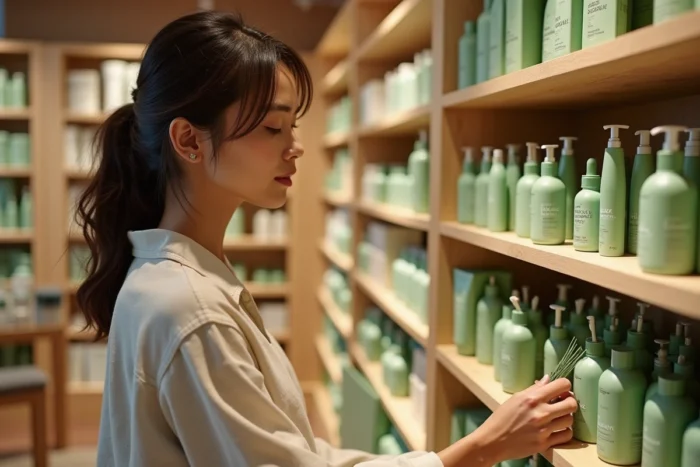
When thinking of accessible, plant-based cosmetics in France, Yves Rocher often comes to mind. The Breton brand, a pioneer in direct sales of plant-based skincare, holds a unique position in the French beauty landscape. However, this positioning is now attracting competitors from all backgrounds, far beyond just the historical brands.
Natural cosmetics in France: a playing field that has changed its face
Have you noticed that the “natural” section of your pharmacy or supermarket has doubled in size in recent years? It’s no coincidence. The segment of natural and organic cosmetics, once dominated by a few players like Yves Rocher or L’Occitane, now welcomes a multitude of brands with very different profiles.
According to sector analyses by Xerfi (2023-2024), non-certified natural cosmetics are growing faster than certified organic in supermarkets and pharmacies. Giants like L’Oréal Paris and Garnier are capitalizing on effective plant-based storytelling, without necessarily sporting an organic label. This phenomenon blurs the lines for consumers and places Yves Rocher in front of competition it did not face ten years ago.
To better understand these dynamics, you can find Yves Rocher’s competitors on Beauté Révolution in a complementary analysis that details the market players.
Sephora, Marionnaud, Nocibé: the pressure from selective beauty retailers
The toughest competition for Yves Rocher does not come from a rival “natural” brand. It comes from large selective beauty chains. Sephora, Marionnaud, and Nocibé are currently capturing an increasing share of the demand for natural cosmetics thanks to dedicated “clean beauty” corners and exclusive brands.
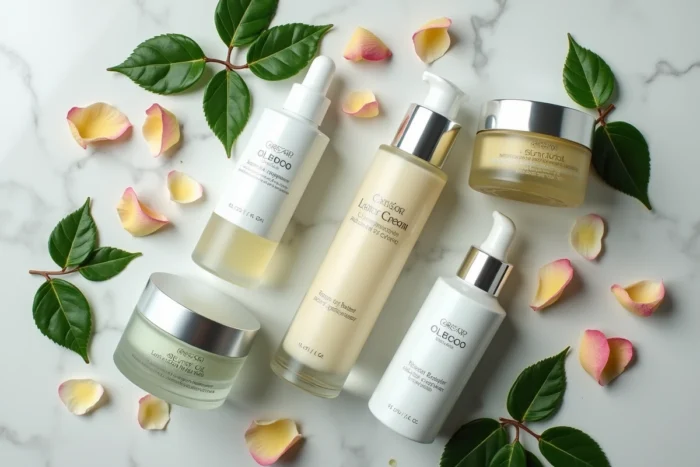
These retailers surpass single-brand networks in store traffic and online visibility. Their advantage: offering dozens of brands under one roof, from premium to mid-range, with a shopping experience perceived as more varied. In the face of this offering, the Yves Rocher model (one brand, its own stores) seems more limited for a clientele that enjoys comparing.
Yves Rocher’s response involves redesigning its points of sale and enhancing its digital strategy, but the differential in choice remains a structural barrier.
“Clean” brands and DNVBs: newcomers nibbling away at market share
The competitive landscape has been profoundly reshaped by the arrival of brands born online, the DNVBs (Digital Native Vertical Brands). Their common feature: short formulas, transparent messaging about ingredients, and primarily digital distribution.
Among the most frequently mentioned names in recent market studies:
- Typology focuses on minimalist skincare, with reduced ingredient lists and a sleek design that appeals to a young, urban clientele.
- Respire gained recognition for its natural deodorants before expanding its body and face range, emphasizing French manufacturing.
- La Rosée and Avril offer certified organic skincare at tight prices, positioned in direct competition with Yves Rocher’s entry-level ranges.
- So’Bio Étic, distributed in supermarkets, plays the card of accessible organic and reaches a family audience similar to that of the Breton brand.
These brands do not seek to compete on the breadth of their catalog. They focus their efforts on a few flagship products, often with a lower customer acquisition cost thanks to social media.
L’Occitane and Nuxe: historical competitors with distinct positioning
L’Occitane en Provence and Nuxe remain long-standing rivals. L’Occitane shares with Yves Rocher a territorial and botanical grounding but targets a more premium segment. Its boutiques, present internationally, cultivate an image of accessible luxury.
Nuxe, on the other hand, occupies the pharmacy and parapharmacy niche, with products like the Huile Prodigieuse that has become a classic. This distribution channel clearly distinguishes it from Yves Rocher, which relies on its own stores and online sales site.
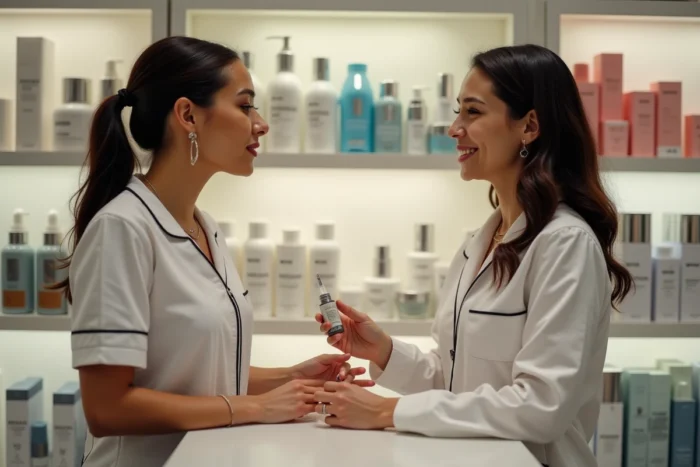
Why does this distinction matter? Because the place of purchase shapes perception. A product bought in a pharmacy benefits from a “health” trust capital that a product bought in a brand store does not automatically have.
The Body Shop: a competitor in retreat, an opportunity to seize
The Body Shop has long represented the most direct competitor to Yves Rocher. The same promise of natural beauty, the same model of single-brand store networks, the same environmental commitment displayed.
The situation has changed: The Body Shop has been placed in restructuring or liquidation in several European countries in 2024. This withdrawal frees up space in the “natural single-brand” segment, directly benefiting Yves Rocher, but also Kiko and L’Occitane, which are capturing part of the customer flow.
This retreat illustrates the fragility of the physical single-brand model in the face of multi-brand retailers and agile DNVBs.
What truly distinguishes Yves Rocher from its competitors
Yves Rocher retains an asset that few competitors can claim: control over the entire chain, from plant cultivation to formulation. The brand grows its own botanical ingredients in Brittany, allowing it to control costs and offer some of the lowest prices in the natural segment.
This integrated model partially protects it from the price war, but is not enough to counter the appeal of new brands on social media or the striking power of selective retailers. The battle is now as much about digital perception as it is about the quality of formulas.
The natural beauty market in France has never had so many credible players. Yves Rocher maintains its fundamentals, but each quarter brings new names and new channels. Following this reshaping is key to understanding where beauty consumption is headed in the coming years.