A tomato seedling that shoots up in two days, an improperly measured watering that drowns the roots, a pruning done too late: most garden failures come from actions poorly timed or poorly suited to the existing soil. Before multiplying plantings, it’s beneficial to correct a few habits that are costly in energy and harvests.
Adjusting watering to the soil rather than the calendar
Watering every two days because you read that frequency somewhere is the best way to saturate clay soil or dry out sandy soil. The starting point is the texture of the soil. Clay soil retains water for a long time but compacts quickly. Sandy soil drains in a few hours.
To assess what you have underfoot, take a handful of moist soil and squeeze it. If it forms a compact ball that doesn’t break apart, you have clay. If it crumbles immediately, it’s sand. In between, you have silt, which is easier to manage.
Watering is determined by hand, not by the calendar: insert a finger five centimeters deep. If it’s dry, water. If it’s still moist, wait. This simple test prevents both water stress and root asphyxiation. You can also find comprehensive resources on gardening on Univers du Bricolage to delve deeper into these soil and maintenance concepts.
Drip irrigation systems or ollas (buried clay pots) allow for slow and steady watering, directly at the root level. In a vegetable garden exposed to full sun, this type of setup significantly reduces waste due to evaporation, especially during periods of intense heat.
Successfully sowing vegetables: timing and containers are everything
We often sow too early, out of impatience. A tomato seedling started in February in a poorly lit house produces leggy, fragile plants that struggle to recover once in the ground. It’s better to wait until March, or even April depending on the region, and to work under good natural light.
Choosing the right support to start
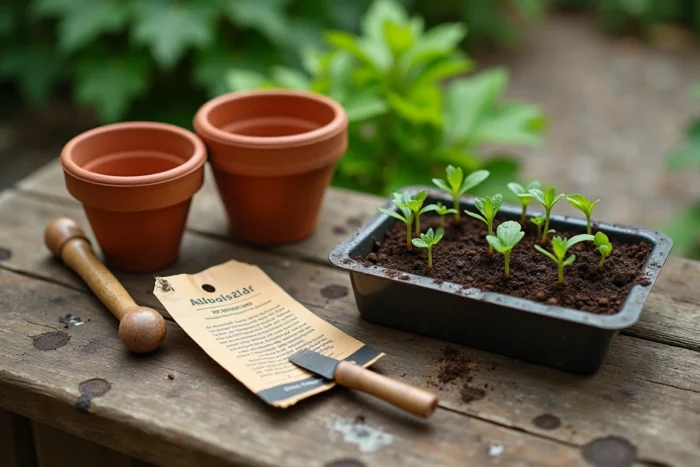
Pots made of peat or cardboard rolls (like cut toilet paper rolls) work well for individual seedlings. Their advantage: you can transplant directly into the ground without disturbing the roots. For fine seeds like lettuce or basil, starting in a seed tray and then transplanting into an intermediate pot is more practical.
- Tomatoes, peppers, eggplants: sow in individual pots, in a warm place, six to eight weeks before planting in the ground
- Zucchini, cucumbers: direct sowing in the ground after the last frosts, or in pots three weeks before
- Radishes, beans, peas: always in the ground, they do not like transplanting
- Lettuce: in a seed tray then transplanting, or direct sowing staggered every two to three weeks to spread out the harvest
Staggering sowing prevents sudden overproduction and ensures regular harvests over several months. This is particularly true for leafy vegetables, which bolt quickly as the first heat arrives.
Soil temperature, not air temperature
We often check the weather to decide when to sow. The air temperature matters less than the soil temperature. A bean seed placed in soil at twelve degrees will germinate slowly and risk rotting. The same seed in soil at eighteen degrees will sprout in less than a week. A soil thermometer costs a few euros and changes the game regarding germination rates.
Protecting your vegetable garden from climatic uncertainties
Late spring frost episodes and summer heatwaves are becoming more frequent. We no longer garden the same way we did twenty years ago, and adapting practices to climate variations is no longer optional.
Mulching remains the first line of defense. A layer of straw, dead leaves, or wood chips placed at the base of plants limits evaporation in summer and protects roots from cold in winter. Aim for a thickness sufficient to make the soil no longer visible, without suffocating the plant collars.
Late frosts and covering solutions
A frost blanket placed over sensitive crops (freshly transplanted tomatoes, zucchini, peppers) is enough to gain two to three degrees during an unexpected cold night. Feedback on this point varies by region, but in mid-altitude areas, keeping some fabric on hand until mid-May remains a reasonable precaution.
Garden greenhouses, including compact models labeled Origine France Garantie, are a more sustainable option for securing harvests. They protect against frost, heavy rains, and allow for extending the season by several weeks in both spring and autumn.
Heatwave: adjusting actions to limit damage
Water early in the morning or late in the evening, never in full sun. Set up temporary shade structures (canes, shade nets) over crops that suffer beyond thirty degrees. Some varieties of tomatoes or lettuces selected for their heat tolerance handle the peaks better: it’s worth researching before buying seeds.
Maintaining soil fertility without synthetic products
A living soil nourishes plants better than any chemical fertilizer. Homemade compost, coffee grounds, crushed eggshells are classic additions, but it’s the regularity of organic inputs that makes the difference, not their occasional quantity.
- Mature compost: to be incorporated on the surface in spring and autumn, without turning the soil deeply to preserve microbial life
- Green manures (mustard, phacelia, clover): sown at the end of the season on free plots, they fix nitrogen and structure the soil before being mowed and buried
- Permanent mulching: as it decomposes, it nourishes the soil from above, like in a forest
Leaving a small area of the garden fallow promotes local biodiversity: beneficial insects, pollinators, natural predators of aphids. You don’t lose productive space; you create a reservoir of life that benefits the entire vegetable garden.
A productive garden relies on soil that is nourished as much as it is cultivated. Rather than multiplying corrective treatments during the season, invest in soil preparation in advance. The rest follows, with less effort and more consistent harvests.