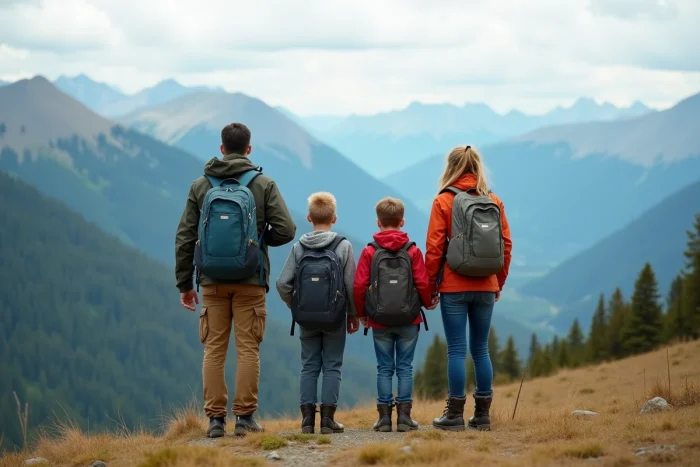
A form as long as a day without end, an administrative queue that makes no distinction between age or small feet: to obtain a passport for a six-month-old baby, nothing simplifies the process. In some countries, children travel for free on public transport until the age of twelve; elsewhere, the limit is set at four years. Even hotels under the same brand display booking or cancellation rules that differ from one location to another.
With every family travel project, reality sets in: every regulation, every standard, every custom varies, disrupting the organization of the departure. What works here proves unsuitable there. Anticipating, comparing, adjusting: preparation resembles a discipline in its own right.
Why traveling with family changes everything: benefits and misconceptions
Traveling the world with your children is not just about reinventing daily life: it is about accepting to let go of routine, to adapt to plural rhythms, and sometimes opposing desires. The experience encourages involving children in every step. The youngest take ownership of the project by drawing, writing, and pasting their memories into a travel journal that, page by page, reveals their talents and perspectives. For parents, it is an opportunity to discover, often with surprise, their children’s adaptability and creativity.
Traveling with children is not a fixed constraint, but a source of adjustments and learning. Days never unfold as planned: one must improvise, negotiate, sometimes feel bored, often laugh or marvel. The travel journal, far from being a gadget, becomes the common thread of the trip, a medium for memory and exchanges.
To gather information, find inspiration, or dispel doubts, parents willingly rely on blogs and communities of other travelers. A platform like Babar Autour du Monde offers practical advice, detailed testimonials, and feedback that reassures and demystifies. One discovers the diversity of approaches, the multitude of possible itineraries, and the richness of family initiatives. This helps to deconstruct, once and for all, the idea that traveling across generations is a daunting task or a sacrifice.
What destinations to choose for adventures suitable for all ages?
The choice of a destination when traveling with children is never taken lightly. Several criteria come into play from the start: safety, the presence of reliable medical services, but also the variety of activities and ease of getting around. France and Europe offer plenty: between mountains, coastlines, historical cities, or lush countryside, there are countless ideas to combine discovery and relaxation. Natural parks or cycling routes allow the youngest to be introduced to adventure while maintaining a certain level of comfort.
Outside the Old Continent, Southeast Asia, the Maghreb, or certain African countries attract families with their warm welcome and landscapes that create lasting memories. But before booking, it is essential to check health recommendations, anticipate formalities, consider vaccinations, and verify insurance coverage. The trick: vary activities, mixing cultural visits, outdoor stops, and playtime. Choosing well-equipped family accommodations, with shared spaces, baby beds, or kitchenettes, significantly simplifies the stay.
Here are some criteria to keep in mind when selecting your next destination:
- Proximity: traveling a few hours by car or train limits fatigue, reassures the youngest, and facilitates organization, especially for a first family experience.
- Budget: certain regions of Southern Europe, the Maghreb, or Southeast Asia allow for reasonably priced travel while offering multiple activity options for both young and old.
- Eco-responsibility: prioritizing less polluting transport, choosing committed accommodations, or adopting simple gestures allows for a different kind of travel, with concern for preserving the environment.
For those looking for concrete ideas or wanting to benefit from lived experiences, specialized sites like Babar Autour du Monde are full of stories, tailored advice, and tested itineraries in real conditions. There are as many anecdotes as solutions to better manage each step of the family journey.
Practical tips for a smooth trip with your children, from preparation to return
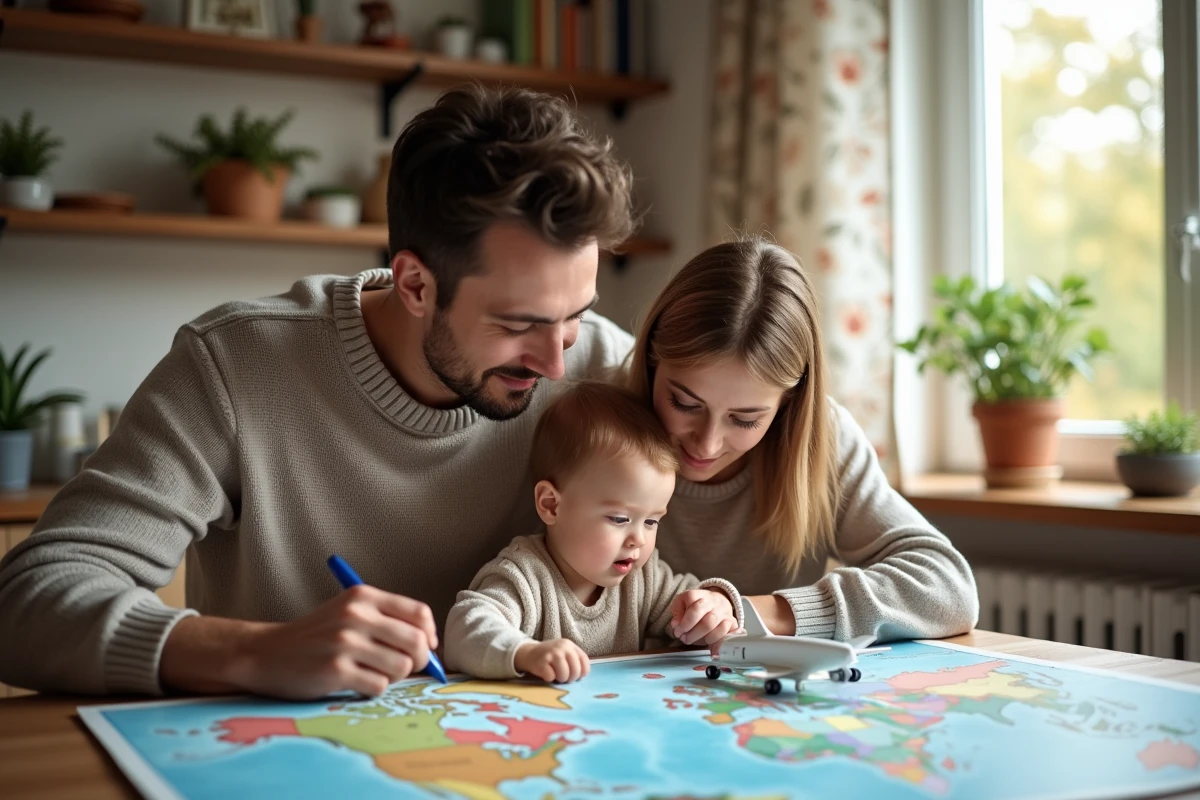
To ensure the departure goes as smoothly as possible, the key lies in organization, but also in the ability to bounce back. Involving children in the preparation, choosing the destination, reading a guide, and developing the travel itinerary gives them an active role and makes the wait more joyful.
To help you, here are the points to anticipate:
- Anticipate the organization: prepare all administrative documents, book suitable transport and accommodations. Tools like Rome2Rio, Google Maps, Booking.com, or Airbnb simplify itinerary planning and the selection of family-friendly lodging (connecting rooms, baby equipment, kitchenettes…).
- Compose the budget: adjust it according to the destination, season, and your desires. Transport, accommodation, meals, activities: every item counts. Traveling outside peak periods often helps reduce costs and avoid crowds.
- Think about health: a suitable first aid kit, checking vaccinations, and solid insurance are essential, especially for distant destinations. On the logistical side, consider balanced meals, regular breaks, and respect everyone’s pace.
Equipment plays a central role: plan for clothing suitable for the climate, games to occupy travel time, a few books or snacks. If school accompanies the trip, inform the institution and adjust the organization according to your constraints. Maintain some structure, but be willing to modify the program as circumstances change: this is often where the most memorable moments arise. To prepare your itineraries, guides like Cartoville “En famille,” Le Nomade Kids & Teens, Mission Routard, or Petit Futé prove to be valuable allies for traveling with children, anywhere in the world.